
Professional Slip-Resistant Additive Application in Ipswich
Professional slip-resistant additive application for Ipswich properties — get a fast, free quote.
- Ipswich & Surrounds
- Residential & Commercial
- Fast Free Quotes
Request Your Free Quote
Last month, one of our clients in Redbank called us after a warehouse worker slipped on their freshly cleaned epoxy floor during the wet season. No injuries, thankfully—but the near-miss sent ripples through their entire operation. Their insurance company started asking questions. Their OH&S manager couldn’t sleep.
Here’s what most facility managers in Ipswich don’t realise: a beautiful epoxy floor can become a liability nightmare without proper slip resistance. Queensland’s humidity and wet season don’t help. Add tracked-in moisture or everyday cleaning, and you’ve got a problem.
We specialise in slip-resistant additives that meet Australian Standard AS 4586 compliance while actually protecting your people. From industrial facilities in Redbank to commercial kitchens in the CBD, we match the right solution to your operating conditions across Ipswich.
The Process
How do slip-resistant additives work?
Slip-resistant additives work by creating textured surfaces that dramatically increase floor friction and prevent slips and falls. These specialized materials—including aluminum oxide, silica sand, polymer beads, and glass aggregates—are integrated into epoxy coating systems to create microscopic peaks and valleys that provide physical grip similar to tire treads.
The application process involves:
- Material Selection – Choosing appropriate aggregate type and size based on risk level
- Integration Method – Broadcasting additives onto wet coatings or pre-mixing into systems
- Texture Creation – Particles embed to form permanent slip-resistant surfaces
- Performance Testing – Verification against AS 4586 standards (R9-R13 classifications)
This texture enhancement maintains effectiveness even in wet, oily, or contaminated conditions, providing reliable traction where standard smooth surfaces become dangerous slip hazards.
Watch
Crystal Epoxy Flooring Ipswich 07 3132 2671
See how slip-resistant additive systems are applied, from surface preparation through to the finished, textured epoxy coating.
Compliance
Australian Standards and Compliance Requirements in Ipswich
AS 4586 Slip Resistance Classifications Explained: AS 4586 measures slip resistance through R9-R13 classifications and four testing methods: pendulum testing for wet surfaces, barefoot ramp testing for pools, dry friction testing, and oil-wet ramp testing for industrial environments.
OH&S Obligations for Ipswich Property Owners: Queensland facility managers carry legal duty of care requirements. Documented compliance reduces workers’ compensation liability, protects against public liability claims, satisfies insurance requirements, and proves ongoing safety commitment during WorkSafe investigations.
Industry-Specific Safety Standards: Food service needs R11-R12 for grease exposure. Healthcare requires sanitiser-compatible textures. Manufacturing demands R10-R11 for chemicals. Retail balances comfort with R9-R10 safety. Automotive workshops need R11-R13 for oils. Pools require barefoot-safe Appendix B compliance.
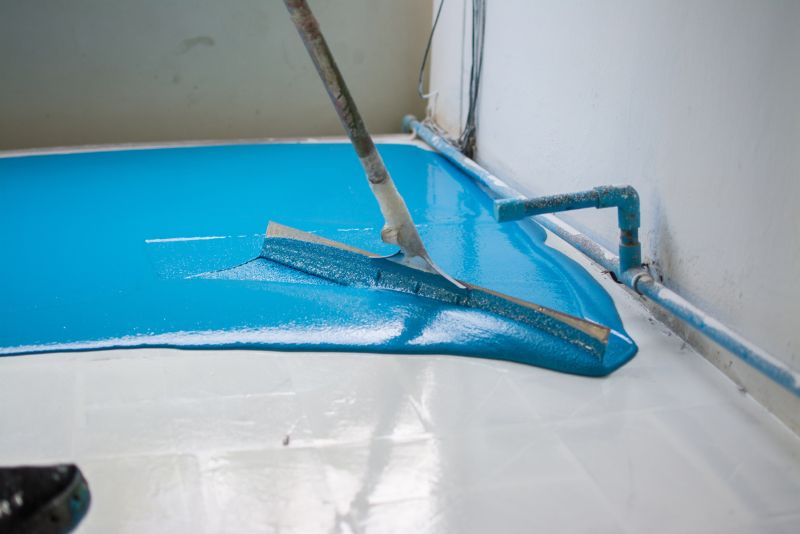 Epoxy flooring installation on concrete floor
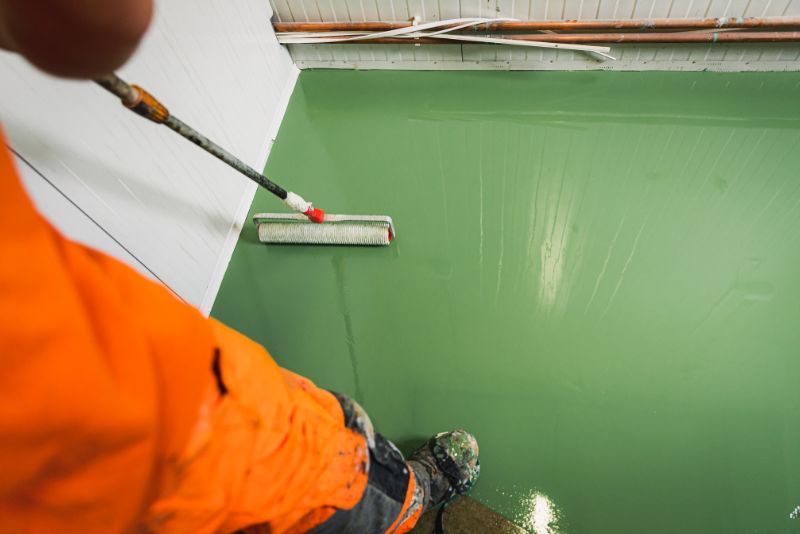 Worker levelling epoxy on the garage floor
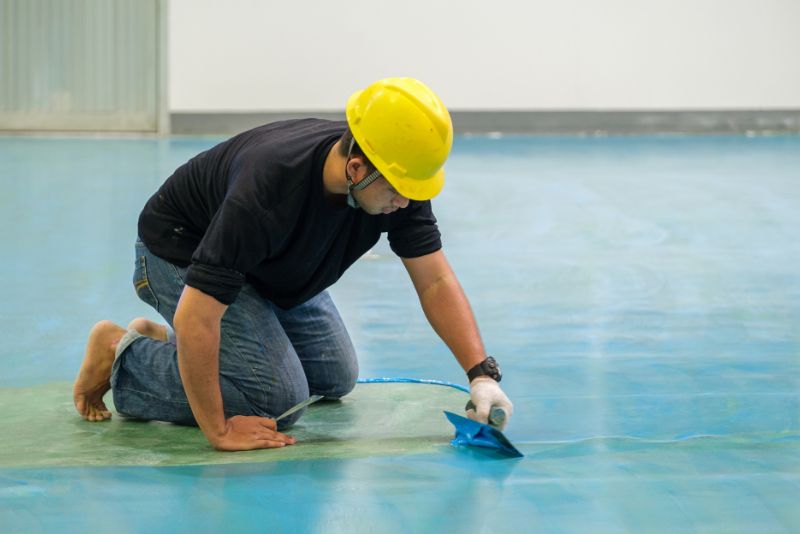 Worker installing epoxy flooring on concrete floor
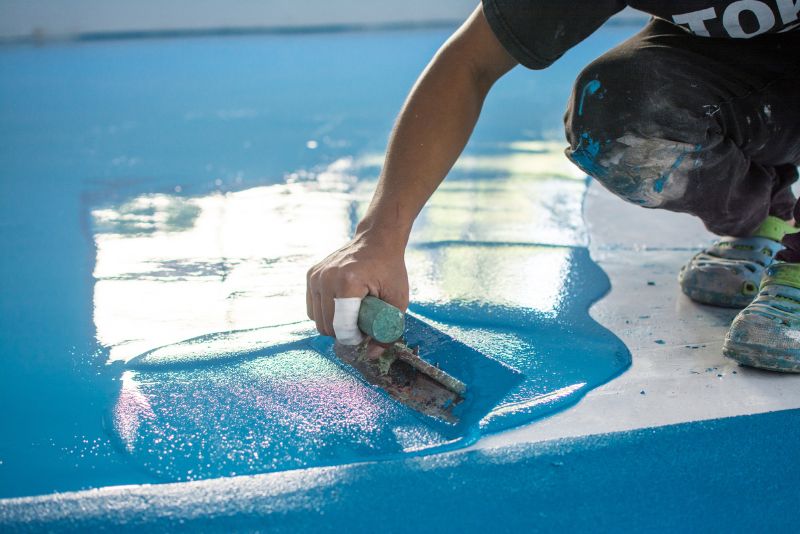 Epoxy floor mixture spread on floor
In Depth
Understanding Slip-Resistant Additives and Safety Enhancement
Types of Slip-Resistant Materials Available
Not all slip-resistant additives are created equal.
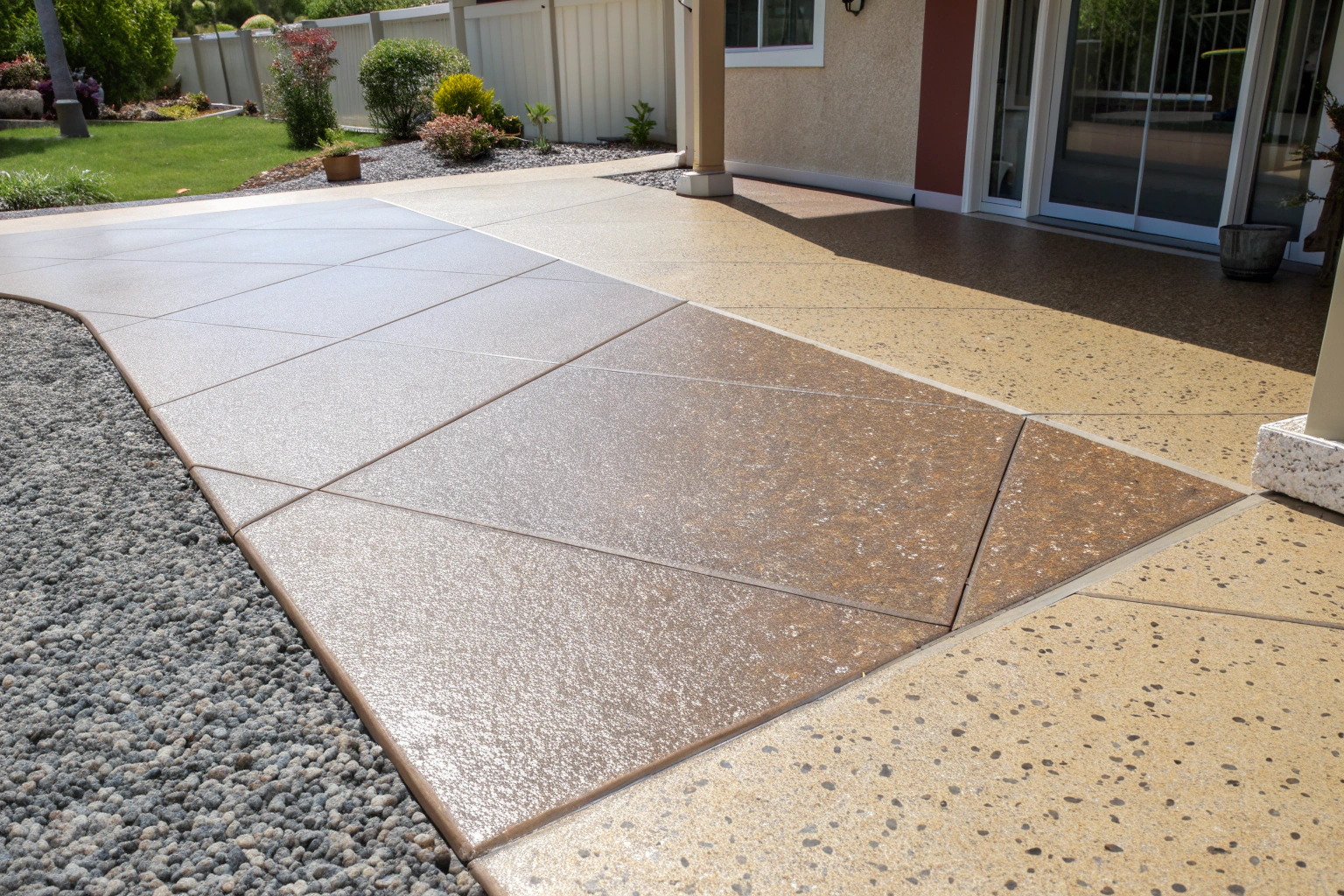
Aluminium oxide is our workhorse for commercial and industrial applications—incredibly durable, holding up to heavy traffic and aggressive cleaning.
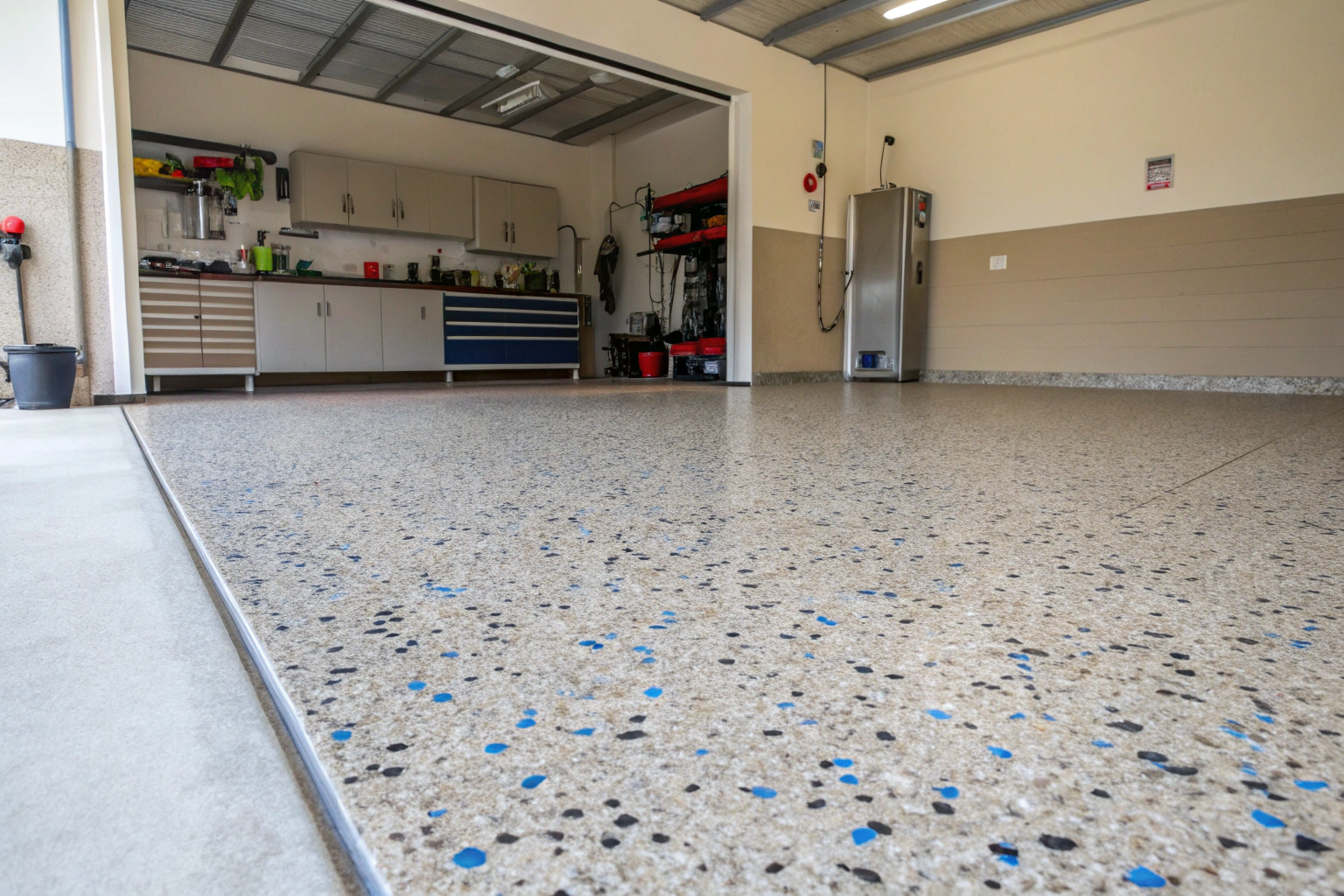
Silica sand offers budget-friendly moderate-traffic protection for retail or office areas. Polymer beads create controlled texture for barefoot areas like pool decks and aged care facilities.
Glass beads reflect light while providing slip resistance, perfect for warehouses needing visibility.
Recycled rubber cushions impact in gyms and play areas.
Specialised aggregates include anti-microbial options for healthcare facilities and colored additives matching your design across Ipswich applications.
We cover more slip-prevention strategies, including how to reduce fall risk in high-traffic areas, in our epoxy floor safety guide.
How Additives Integrate with Epoxy Systems
Application method matters as much as the additive itself.
Broadcast method involves throwing additives across wet epoxy—requiring skill for even coverage.
Blend integration mixes additives directly into epoxy before application, creating a uniform texture throughout.
Controlled distribution targets high-risk zones like loading docks while leaving other areas comfortable.
Multi-layer systems build texture progressively across multiple coats for precise AS 4586 compliance.
Topcoat sealing protects additives while maintaining effectiveness, locking particles in place and extending slip resistance lifespan through proper encapsulation methods.
Benefits Beyond Basic Floor Safety
Slip-resistant additives prevent falls, but downstream effects touch every operational aspect.
Insurance premiums drop when demonstrating AS 4586 compliance—Ipswich clients save thousands annually.
Workers’ compensation claims cost $20,000-$50,000 per incident; proper additive application eliminates these expenses.
Worker confidence boosts productivity 10-15% when teams trust the flooring underfoot.
OH&S compliance is protected legally with documented Australian Standards adherence.
Property value increases from safety features, attracting commercial tenants.
Customer attraction happens when people feel secure in your retail or healthcare space across Ipswich.
Specification
Additive Density and Coverage Rates
Light texture
Light texture (2-4 lbs/100 sq ft) suits dry office and retail areas needing minimal slip resistance.
Medium texture
Medium texture (4-6 lbs/100 sq ft) provides standard commercial space protection for general-purpose applications.
Heavy texture
Heavy texture (6-10 lbs/100 sq ft) handles extreme wet or contaminated industrial environments with chemical and oil exposure.
Custom coverage rates
Custom coverage rates match specific risk assessments and operational requirements.
Graduated density application
Graduated density application varies the texture across zones based on actual slip hazards.
Quality control verification
Quality control verification ensures consistent performance meeting specified standards.
By Environment
Customising Slip Resistance for Your Ipswich Environment
Industrial Facilities and Manufacturing Floors
Heavy-duty additives handle oil and chemical contamination from equipment traffic. Loading docks need an extreme texture for weather exposure. Production areas require R11-R13 ratings. Installations are scheduled during off-shifts, minimising operational downtime.
Commercial Kitchens and Food Service Areas
Grease and water-resistant systems meet Queensland Health Department requirements. Anti-microbial options reduce bacterial growth in prep zones. Texture balances easy cleaning with safety. Emergency egress routes maintain verified slip resistance.
Healthcare, Retail, and High-Traffic Spaces
Hospital corridors withstand medical-grade disinfectants and frequent cleaning. Retail entrances protect against Ipswich wet season tracking. Spill-prone areas receive targeted application. ADA accessibility requirements integrate with aesthetic brand environments, maintaining customer confidence.
Questions
Frequently Asked Questions About Slip-Resistant Additives in Ipswich
How much does slip-resistant additive application cost in Ipswich?
We typically quote between $8-$15 per square meter for most commercial applications, though costs vary based on additive type, coverage density, and project size. Heavy-duty industrial applications requiring R12-R13 ratings run higher due to specialised materials and increased coverage rates. We provide free on-site assessments throughout Ipswich and the surrounding areas, giving you accurate quotes based on your specific environment and safety requirements. Most clients find the investment pays for itself within 1-2 years through reduced insurance premiums and eliminated workers’ compensation claims.
Can you add slip resistance to existing epoxy floors?
Absolutely. We apply slip-resistant topcoats over existing epoxy systems regularly throughout Ipswich. The process involves light surface preparation, ensuring proper adhesion, then applying a clear epoxy topcoat with integrated or broadcast additives. Your floor gets enhanced safety without complete replacement. We assess the existing coating condition first—if it’s delaminating or severely worn, we might recommend full removal and reapplication for best long-term performance and compliance.
How long does the application process take?
Most projects take 2-3 days from start to finish, including surface prep, additive application, and curing time. Small areas like commercial kitchens or retail entrances might finish in one day. Large industrial facilities can take a week or more, depending on square footage and whether we’re working around your operations. We schedule installations to minimise disruption—nights, weekends, or staged sections, keeping parts of your facility operational. Curing typically requires 24-48 hours before light foot traffic and 5-7 days before heavy equipment.
Will slip-resistant additives make my floor difficult to clean?
Not if we apply the right texture for your environment. We match additive type and density to your actual cleaning protocols and contamination levels. Light to medium textures in retail or office spaces can be cleaned just like smooth floors using standard equipment. Heavier industrial textures require slightly more attention but remain completely manageable with proper techniques. We train your maintenance staff on best practices during installation, ensuring they understand how to preserve both cleanliness and slip resistance long-term.
Do additives wear out over time?
Yes, but longevity varies dramatically based on traffic, contamination, and maintenance. Aluminium oxide in moderate-traffic areas lasts 5-10 years before needing renewal. Heavy industrial environments with constant forklift traffic might see a 3-5 year. We provide realistic lifespan estimates during initial assessment and recommend monitoring schedules. Regular testing catches degradation early, allowing planned reapplication before compliance lapses. Many Ipswich clients schedule testing annually, giving them plenty of warning before performance drops below acceptable levels.
Can slip-resistant additives be used on outdoor surfaces?
Definitely. We install slip-resistant systems on outdoor loading docks, walkways, and commercial entrances throughout Ipswich regularly. UV-stable additives and topcoats handle Queensland’s sun exposure without degrading. Weather resistance is actually why many clients choose additives—rain, humidity, and temperature fluctuations don’t affect performance like some other slip prevention methods. We select materials specifically rated for exterior use, ensuring long-term durability under Ipswich’s climate conditions, including our intense wet season.
Book Today
Get Your Free Slip Resistance Assessment Today
Don’t wait for an accident to happen before addressing floor safety. Your employees deserve safe floors. Your business deserves protection from liability. Let’s make it happen.
- Crystal Epoxy Flooring Ipswich
- 📞 Call Now: 0731322671
- 📧 Email: info@ipswichfloorcovering.com
- 📍 Serving Ipswich, Springfield Lakes, Redbank, and surrounding regions
We work around your schedule—nights, weekends, or staged installations, keeping your operations running. Every installation includes full AS 4586 testing documentation, giving you the compliance records you need for insurance and regulatory requirements.
Book your free assessment now—no obligations, just honest advice from local flooring specialists who’ve been serving Ipswich businesses for years.
CALL (07) 3132 2671 NOW